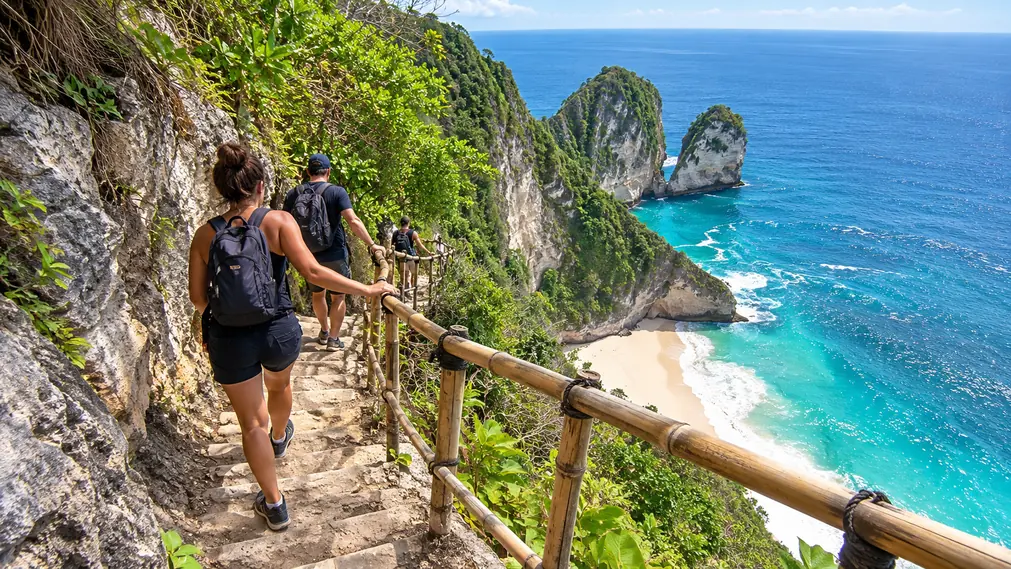
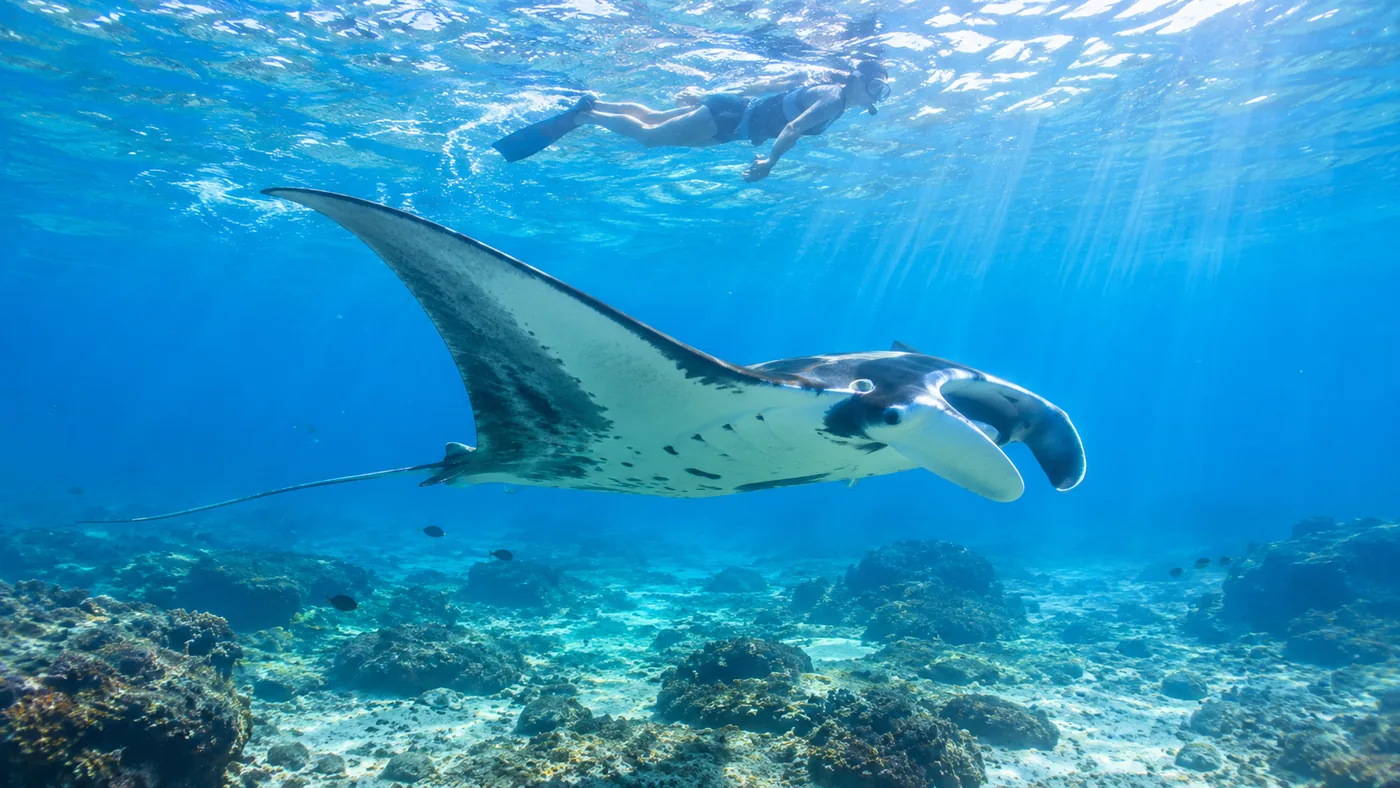
Booking choice: The snorkel and west tour, from $43 per person. Check dates Tour details
The mantas at Nusa Penida are reef manta rays, with wingspans of up to about 4 metres, according to the dive writers at nusapenida.org. They gather at cleaning stations off the island's south and west coast, where small fish pick parasites off their skin. That habit is what makes them findable, and why snorkel boats can reach them in a day from Bali.
This guide explains the two manta sites, Manta Bay and Manta Point, gives the sighting odds the operators publish, covers Crystal Bay, Gamat Bay and the other reef stops, and sets out the sea conditions and the rules in the water. The last section compares the three snorkel tours we cover.
The quick answer
Most shared snorkel tours stop at Manta Bay, where operators put manta sightings at about 30% of trips. Manta Point is further along the coast, more exposed, and reached only when the swell allows. Crystal Bay and Gamat Bay add coral, reef fish and sometimes turtles. Never touch a manta. For a first trip, the snorkel and west tour from $43 covers three spots and the west coast.
Can you snorkel with manta rays at Nusa Penida?
Yes. Reef mantas visit the island's cleaning stations all year, and snorkellers watch them from the surface while they feed or circle a few metres below.
You do not need to dive. The mantas often swim close to the surface, and a guide in the water points them out. They are harmless: a manta has no stinging barb, unlike a stingray, and it feeds on plankton. The dive operators on the island say the best conditions are usually in the dry season, April to October, when the sea is calmer and the water clearer.
Indonesia banned manta fishing and trade in 2014, creating a manta sanctuary across its waters, which is one reason the Nusa Penida population is still there to see.
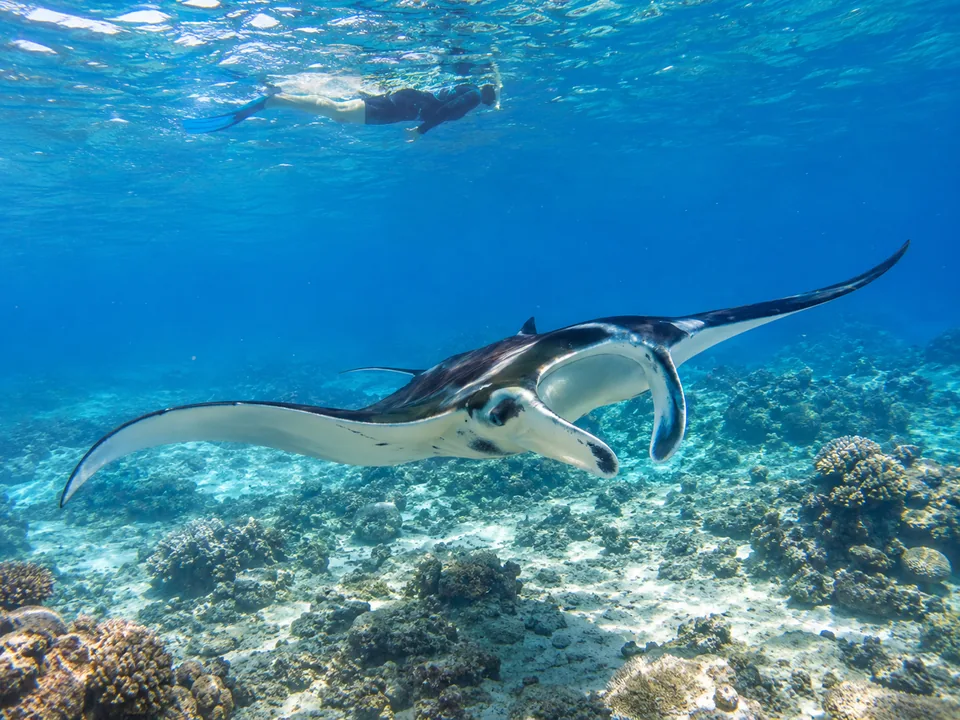
What is the difference between Manta Bay and Manta Point?
Manta Bay is the closer, more sheltered site that most shared snorkel tours use. Manta Point is further along the south coast, more exposed to the swell, and the site dive operators describe as the more reliable for mantas.
The names get mixed up, so check which one your tour visits. Several listings say the site is chosen on the day: the small-boat snorkel day goes to Manta Bay or Manta Point depending on sea and weather, and the premium yacht day lists selected spots such as Manta Point or Manta Bay.
| Manta Bay | Manta Point | |
|---|---|---|
| Where | Southwest coast, closer to the west-side harbours | Further along the southwest coast, open sea |
| Sea | More sheltered, used most days | Choppier; boats go only when the swell allows |
| Boats | Busy, many shared tours | Fewer boats; they stay on the engine and pick swimmers up |
| Suits | First-time snorkellers | Confident swimmers, calm days |
| Mantas | About 30% of trips, per the operators | Described as more reliable; never guaranteed |
What are the chances of seeing manta rays?
On the shared tours to Manta Bay, operators put sightings at about 30% of trips. Plan the day around the whole snorkel, not one animal.
That figure is printed on three listings, including the snorkel and west tour, which adds that sightings depend on weather, sea conditions, currents and season. Reviews show the range. Deep, on the yacht day, saw three mantas along with turtles and coral reefs. Marvin, on the same tour, saw none and still called it a super fun day. Sarah, on the small-boat day, saw none too, and wrote that there is no deal with nature.
Two things help. Go in the dry season, when calmer water lets boats reach the better sites. And pick a tour with more than one manta option: the small-boat and yacht days choose between Manta Bay and Manta Point on the day.
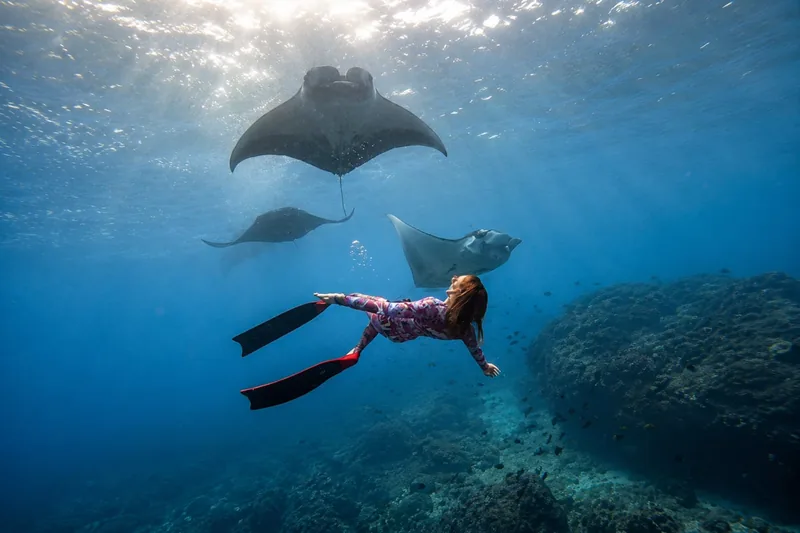
Manta Bay, Crystal Bay and Gamat Bay with gear and a GoPro, then the west coast viewpoints by option. The operator is upfront: mantas on about 30% of trips.
Explore the snorkel and west tour Tour detailsWhat is snorkeling at Crystal Bay like?
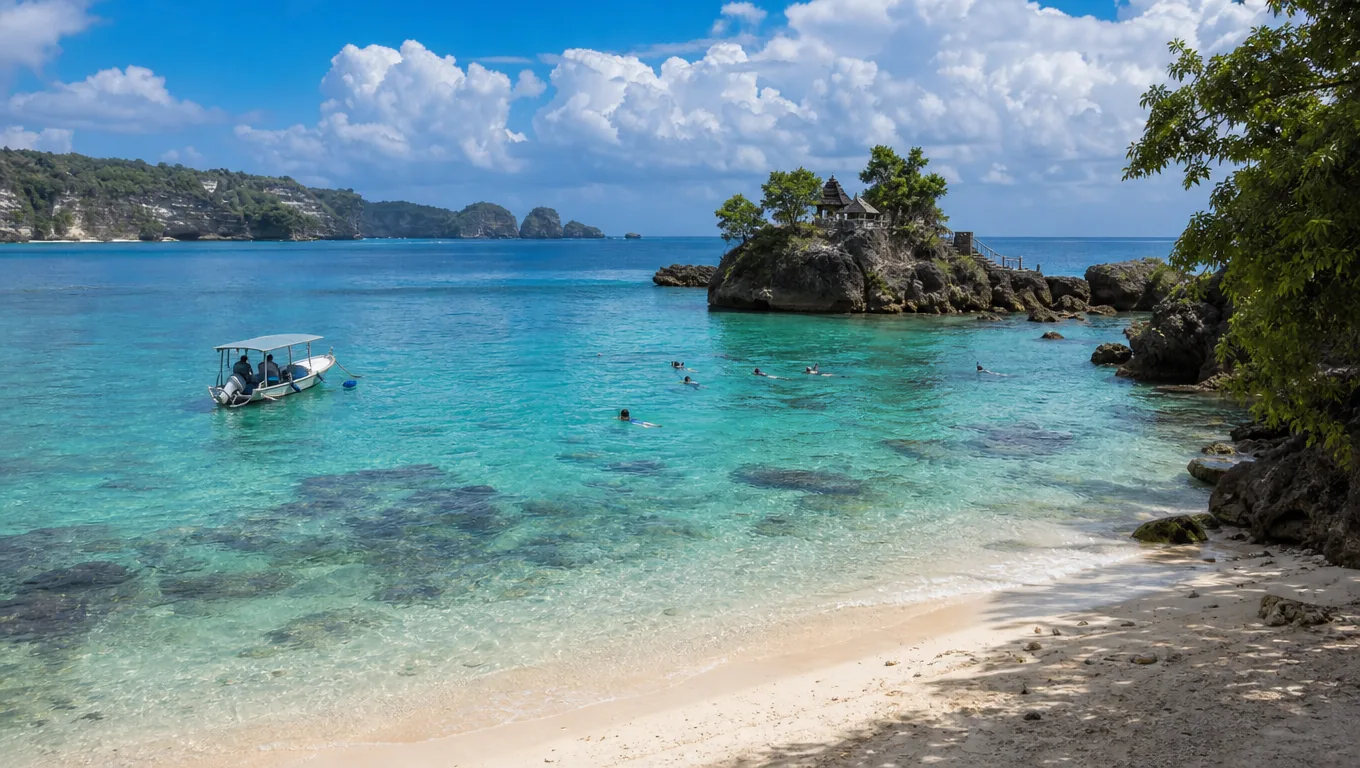
Clear water, healthy coral and plenty of reef fish, with turtles some days. It is calm near the shore, but the current gets strong towards the rock island in the middle of the bay.
Crystal Bay is on the west coast, about 15 minutes from Toyapakeh harbour by road. On a tour you snorkel from the boat; on your own, warungs on the sand rent masks and fins. The local rule from nusapenida.org is a good one: never swim past the line of wooden boats anchored in the bay, and do not try to reach the rock island. Enter from the sandy centre of the beach, not the right side, where waves can push you onto shallow coral at low tide.
Mornings are best: calmer water and fewer people. From July to October Crystal Bay is also famous with divers for the mola mola, the ocean sunfish, but that is a deep-water sighting, not one for snorkellers.
Is Gamat Bay good for snorkeling?
Yes. Gamat Bay, between Toyapakeh and Crystal Bay, is quieter than its neighbour, with good coral and turtles some days. The current can be moderate to strong, so stay with the guide.
nusapenida.org calls Gamat the wilder little sister of Crystal Bay. It is a regular stop on the snorkel and west tour and the premium yacht day. Other tours use different reefs:
- SD Point and Wall Bay: clear water and coral walls, on the small-boat snorkel day.
- Mangrove Point: a long drift snorkel near Nusa Lembongan, known for coral and turtles, on the small-boat day and the yacht day.
A drift snorkel means the current carries you along the reef and the boat follows. It is easy if you relax and keep your fins still, and it is why the guides keep groups close.
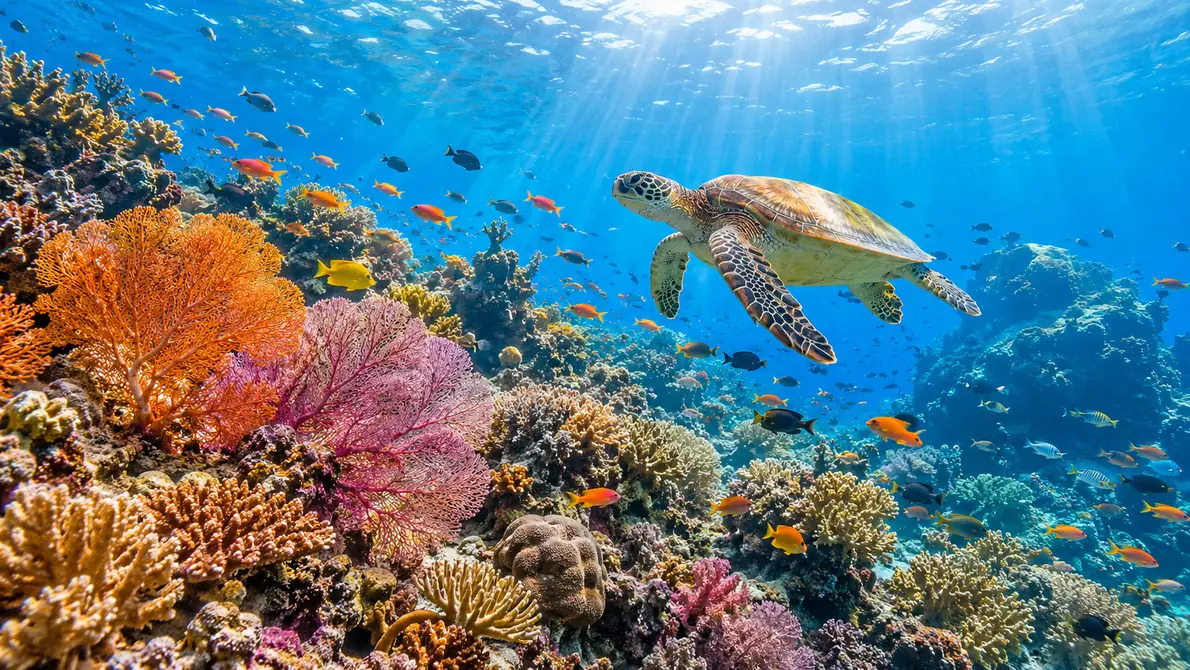
A small boat with no more than 13 on board, three snorkel stops, lunch by a pool and the Kelingking viewpoint.
Check dates for the small-boat snorkel dayWhat are the water conditions like around Nusa Penida?
Clear and lively, often with swell and current. The sea is calmest in the dry season, April to October, and the water can feel cooler from about July to October, when deep water rises along the island.
Nusa Penida sits on a channel between Bali and Lombok, and the water moves. Expect a rocking boat at the manta sites and a bumpy crossing from Sanur: the operator of the all-inclusive day mentions boats at 23 to 25 knots. Seasickness tablets before you board are a good idea; one reviewer on the small-boat day says the crew handed out medicine when the waves picked up.
- December to March: the rainy season, with rougher seas. Some trips change sites or are cancelled.
- Life jackets: provided on all three snorkel tours we cover. Wear one if you are not a strong swimmer.
- Weather calls: the yacht operator says its tour may be rescheduled or fully refunded in unsafe sea conditions.
More on the months ahead in the rainy season 2026-27.
What are the rules for snorkeling with manta rays?
Do not touch them, do not chase them and do not crowd them. Float still, keep your distance and let the manta choose how close it comes.
The rules come from the dive and snorkel operators, and the listings say the same: touching marine life is not allowed on any of the three snorkel tours we cover.
- No touching: a manta's skin is covered in a protective mucus layer, and a hand strips it away, the dive writers at nusapenida.org explain.
- No chasing: a manta swims faster than you. Finning after it only frightens it away.
- Give them space: do not crowd the cleaning station or dive down onto it. Stay at the surface with the group.
- Mind the coral: do not stand on it or touch it, and use biodegradable sunscreen, which the small-boat operator asks for.
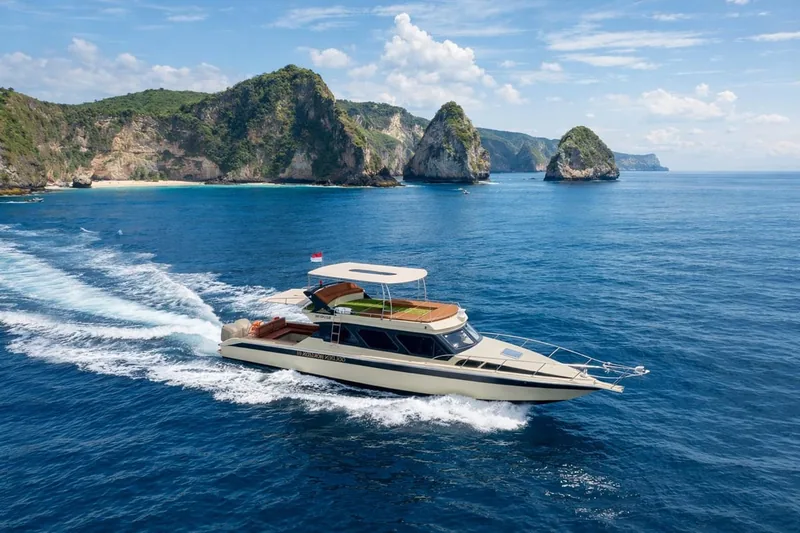
A yacht from Sanur, a snorkel guide, Manta Point or Manta Bay by conditions, and a beach-club lunch.
Check dates for the premium yacht dayWhich Nusa Penida snorkel tour should you book?
The snorkel and west tour for value and a land tour in one day. The small-boat snorkel day for a smaller group and four reef stops. The premium yacht day for comfort, a beach-club lunch and every fee paid.
All three start in Sanur. Check the listing's not-suitable list: the snorkel and west tour and the yacht day are not suitable for non-swimmers or people prone to seasickness.
| Tour | Starts | In the water | Not suitable for | From |
|---|---|---|---|---|
| Snorkel and west tour | Sanur (Axe Stone), 07:30 or 08:00 boat | Manta Bay, Crystal Bay, Gamat Bay; GoPro | Children under 5, non-swimmers | $43 |
| Small-boat snorkel day | Sanur (Seagrass by the Beach) | Manta Bay or Manta Point, SD Point, Wall Bay, Mangrove Point | Children under 6 | $95 |
| Premium yacht day | Sanur Beach (Surya Lagoon Restaurant) | Manta Point or Manta Bay, Gamat Bay, Mangrove Point | Children under 8, non-swimmers | $90 |
Lunch is not included on the snorkel and west tour; it is on the other two. The yacht day also covers the island and beach entrance fees.
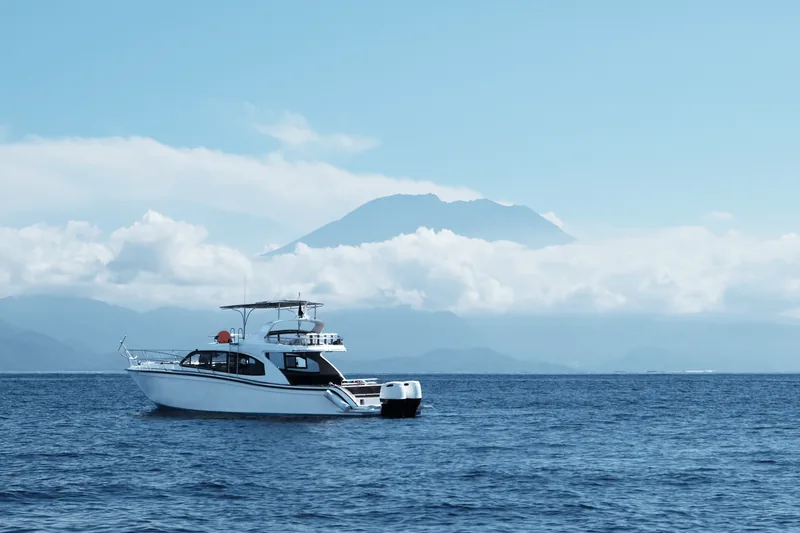
No more than 13 on board, the manta site picked by the conditions, four reef stops and the Kelingking viewpoint.
Explore the small-boat snorkel day Tour detailsFrequently asked questions
Are there sharks near Nusa Penida?
Yes, mostly small reef sharks such as whitetips, blacktips and bamboo sharks, and they keep away from people. The dive writers at nusapenida.org call the risk to snorkellers negligible. The current is the thing to respect, not sharks.
Can non-swimmers snorkel with manta rays?
Not on every tour. The snorkel and west tour and the yacht day list non-swimmers as not suitable. If you are a weak swimmer, wear the life jacket all the time and stay next to the guide.
What is the best time of year to see manta rays at Nusa Penida?
Mantas are there all year. The dry season, April to October, usually brings calmer seas and clearer water, which makes it easier for boats to reach the manta sites.
Do I need to bring my own snorkel gear?
No. Masks, snorkels, fins and life jackets are included on all three tours, and each one films you with a GoPro.
Ready to book
Choose your Nusa Penida day
Free cancellation up to 24 hours before on every option. Prices are from-prices in USD and move with the season.
Snorkeling 3 Spots and West Coast Tour
- Return speedboat from Sanur
- Snorkel boat, gear and GoPro
- West coast car and driver (by option)
Small-Boat Snorkeling, Mantas and Kelingking
Four snorkel stops from a small boat, lunch by an infinity pool and Kelingking.
Premium Yacht, Manta Snorkeling and Kelingking
- Premium yacht from Sanur
- Snorkel gear and guide
- Lunch at a beach club